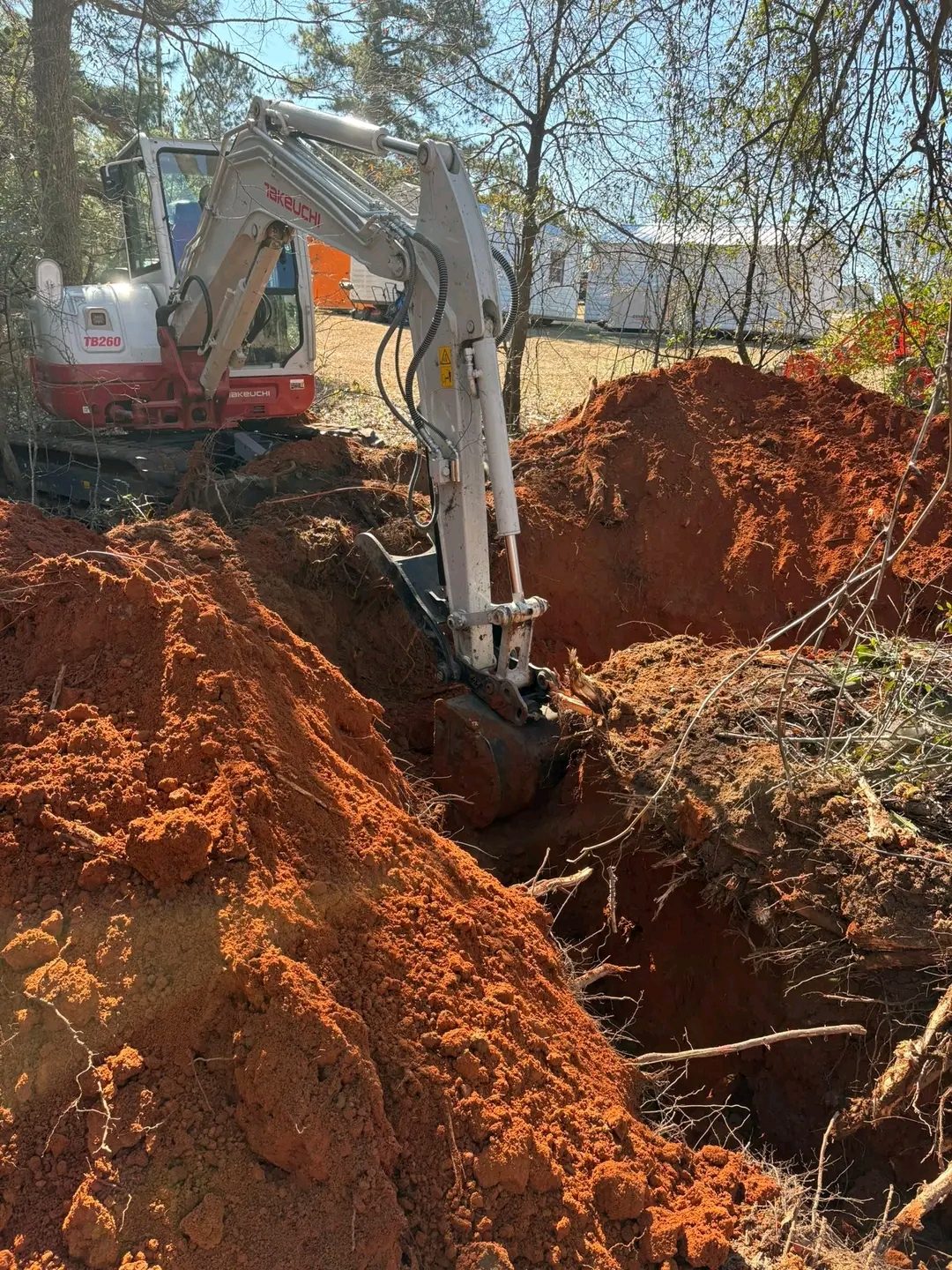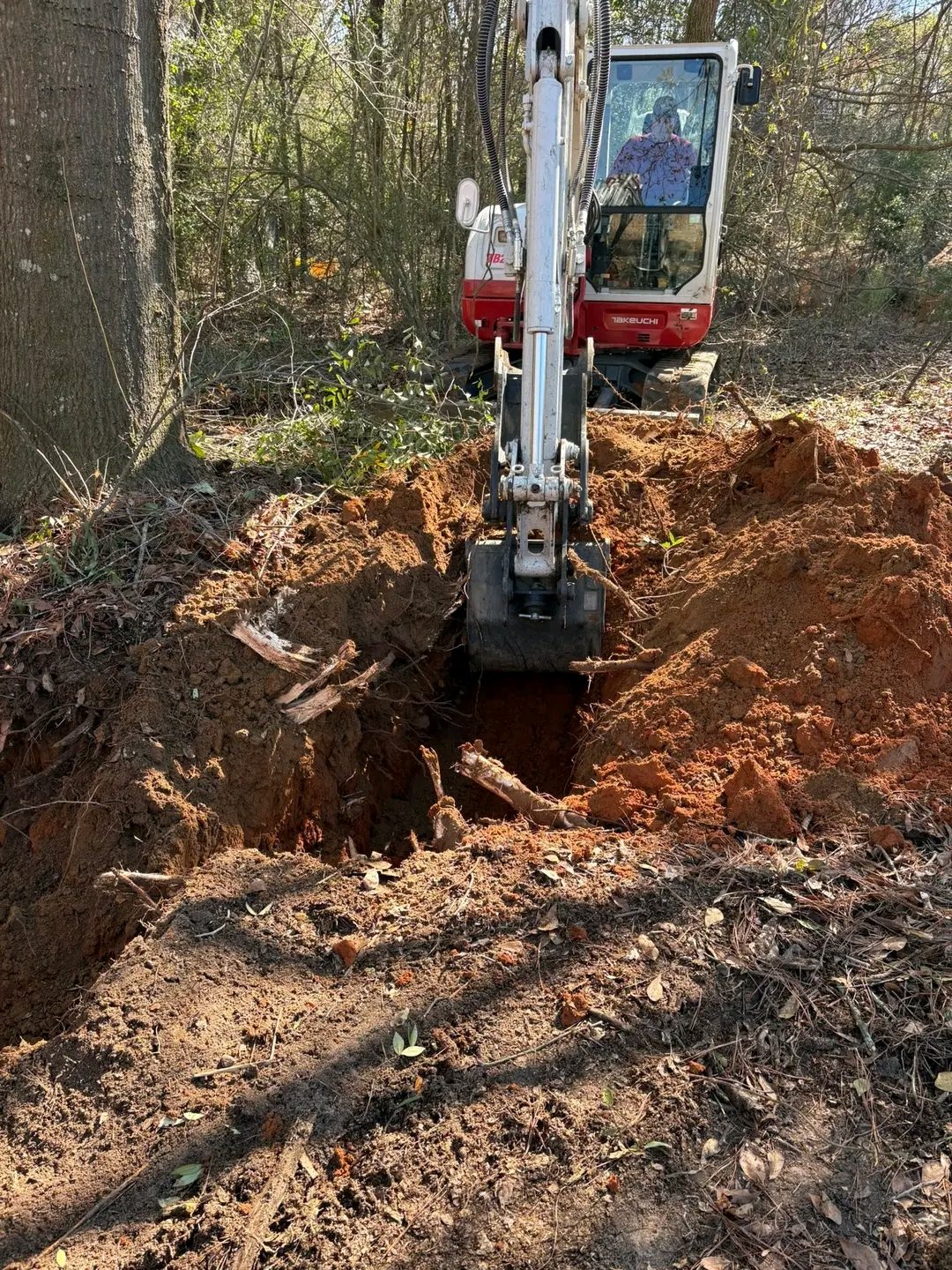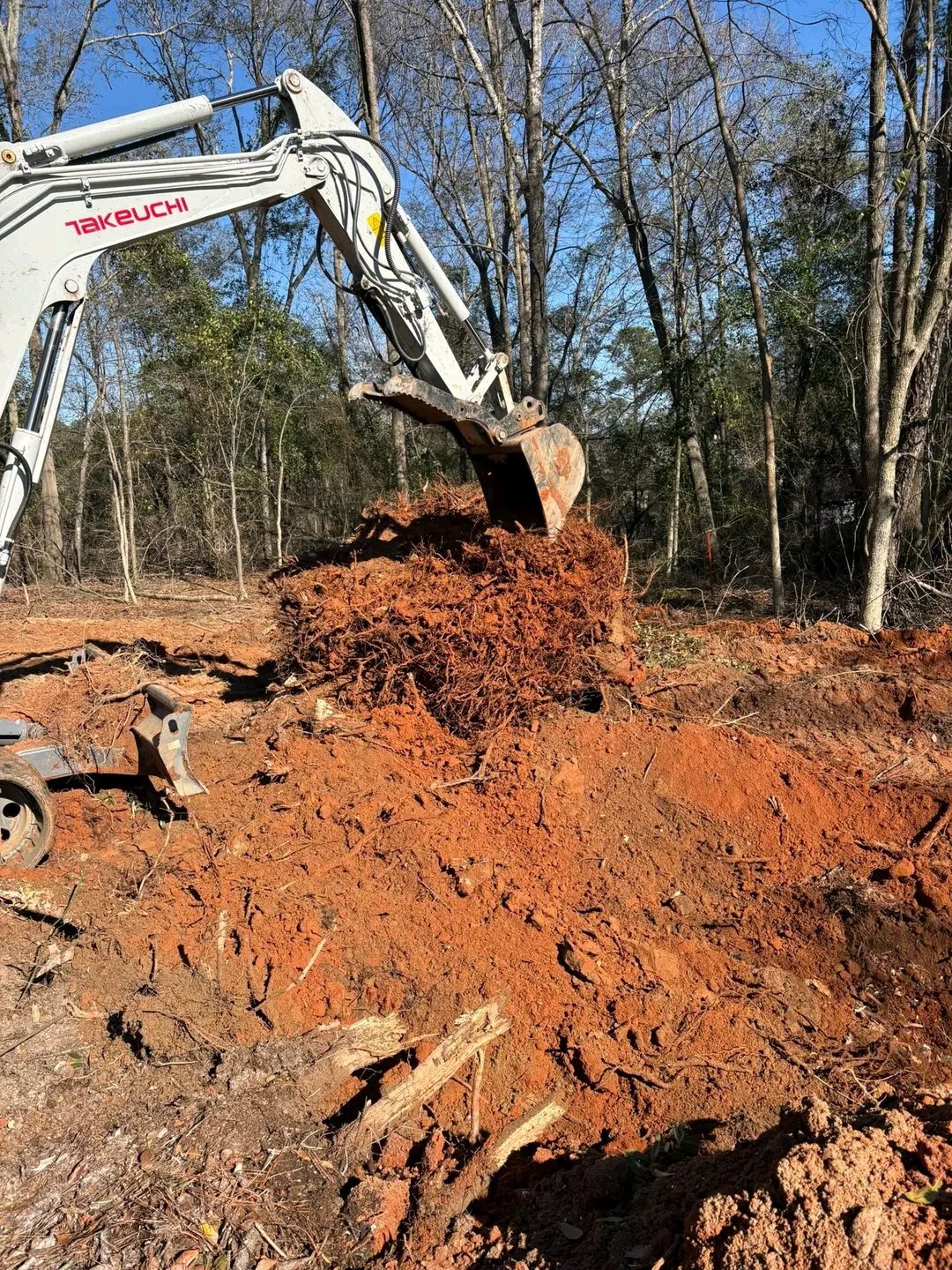
Excavation removes or relocates soil to create space for a planned improvement. TCB Farms & Clearing LLC provides excavation and site work in Trenton, Aiken, North Augusta, Jackson, Greenwood, Lexington, Augusta, Evans, and Hephzibah. Projects may include digging a trench, shaping a ditch, preparing a site, removing a root mass, or moving earth as part of a driveway or land-clearing job. The site and project goal determine the right equipment and work sequence.
Before excavation starts, the scope should identify the work area, approximate depth and footprint, equipment access, where excavated material will go, and what the finished surface should look like. Utility locations and property boundaries are especially important. Owners should arrange for underground utilities to be marked before digging and share any known site plans or constraints with the crew. If the work is tied to a permitted construction project, the property owner or contractor should confirm applicable plans and local requirements.
Soil conditions can change the pace and approach. Clay, wet ground, roots, buried debris, slopes, and tight access can all affect equipment movement and the volume of material to handle. Excavated soil may be reused on site when appropriate, stockpiled for later work, or removed if included in the agreed scope. An estimate is based on the actual conditions and requested finish; there is no universal excavation price that applies to every trench, ditch, or site.
Residential excavation often supports an individual property improvement, such as a drainage feature, driveway, or preparation for a planned structure. Construction excavation can be more closely tied to engineered plans, foundations, or a larger build sequence. TCB Farms & Clearing can discuss the earthmoving portion of a project and coordinate related grading, land clearing, or debris removal. For excavation in the CSRA, contact TCB with the location and intended work so the scope can be reviewed and estimated.
Before requesting an estimate, gather any available measurements, drawings, or notes about the planned depth and dimensions. Marking the general work area and identifying the destination for excavated soil can clarify the scope. If the project involves a trench, share what it will serve and whether another contractor has specified its route or dimensions. Owners should never assume a buried utility is absent; arrange for utility locating before digging and identify private lines that may not be included in public marking services. These preparations help the site review focus on equipment access, soil handling, and the finished area. The estimate can then distinguish the excavation itself from any related hauling, backfill, or grading requested.